
US Submarine Sinks Iranian Warship in Indian Ocean

The sinking of an Iranian warship by a United States submarine has become one of the most significant naval events in the ongoing conflict involving Iran and the United States.
The attack occurred in the Indian Ocean and quickly drew international attention. Military analysts say the incident marks a rare modern naval engagement involving submarine-launched torpedoes.
The destruction of the Iranian naval vessel also raised concerns about the expansion of the regional conflict beyond the Middle East.
Iranian Warship Targeted in the Indian Ocean
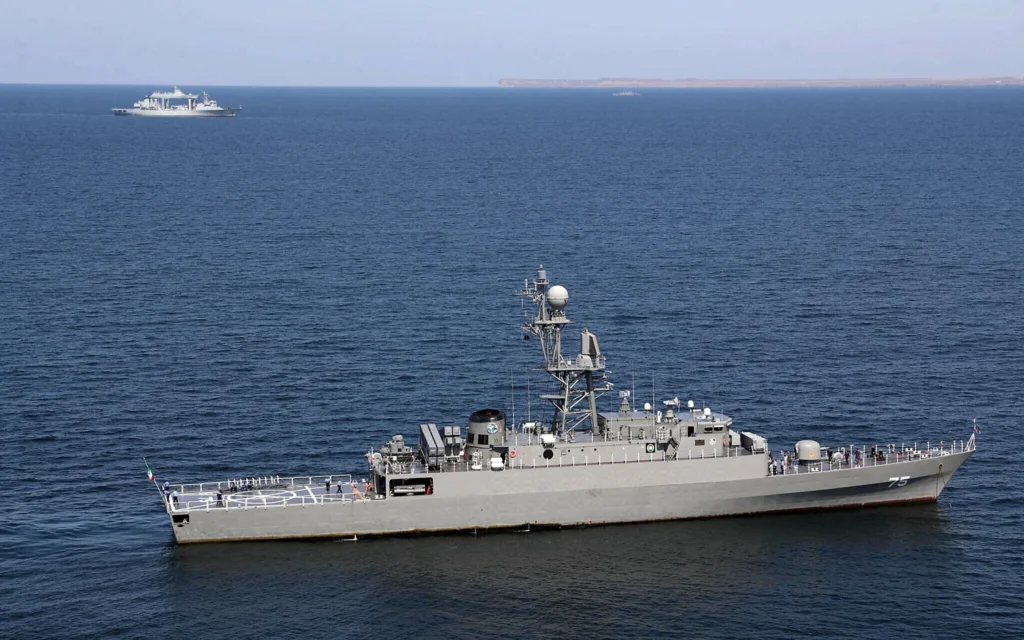
The Iranian naval frigate IRIS Dena was sunk on March 4, 2026.
The vessel was operating in international waters south of Sri Lanka when it was struck by a torpedo fired from a United States Navy submarine.
Key details of the naval incident:
- Location: Indian Ocean near Galle, Sri Lanka
- Date: March 4, 2026
- Weapon used: Mark 48 torpedo
- Crew on board: about 180 sailors
- Casualties: at least 87 confirmed dead
After the explosion, the Iranian warship issued a distress signal before sinking beneath the sea. Rescue teams from Sri Lanka later recovered bodies and saved several survivors from the water.
First Submarine Warship Sinking in Decades
Military officials described the strike as historically significant.
According to defense briefings, the attack was the first confirmed case since World War II in which a United States submarine sank an enemy surface warship using a torpedo.
Submarine warfare has become more focused on surveillance and deterrence in modern conflicts. Direct submarine attacks on surface ships are rare.
In this case, the submarine reportedly fired a single torpedo that struck the rear section of the Iranian frigate, causing a massive underwater explosion.
Defense officials described the strike as immediate and decisive.
The ship broke apart and sank quickly after the impact.
Background of the Iranian Warship
The IRIS Dena was part of Iran’s modern naval fleet.
Important features of the warship included:
- Class: Moudge-class frigate
- Commissioned: 2021
- Displacement: about 1,500 tons
- Armament: anti-ship missiles, torpedoes, and naval guns
The vessel had recently participated in international naval exercises in India before beginning its return journey to Iran.
During the return trip, the warship entered the Indian Ocean where the attack occurred.
Analysts believe the ship was operating independently at the time of the strike.
Rescue Operations After the Attack
Shortly after the explosion, Sri Lankan authorities launched a search and rescue mission.
Their efforts included:
- naval patrol vessels
- helicopters
- emergency medical teams
Rescuers recovered dozens of sailors from the sea.
Many survivors were transported to hospitals for treatment due to injuries and exhaustion.
However, many crew members remained missing after the incident.
Debris and oil slicks were later spotted in the area where the ship sank.
Rising Tensions in the Iran War
The naval strike occurred during a wider escalation between Iran and the United States.
The conflict has already involved:
- missile strikes
- drone attacks
- air raids on military targets
Military officials say multiple Iranian naval vessels have been destroyed during the ongoing conflict.
The sinking of the warship represents a significant blow to Iran’s naval capabilities.
Experts say control of sea routes in the region is a major objective for both sides.
Strategic Importance of the Indian Ocean
The Indian Ocean is one of the world’s most important maritime trade routes.
Large volumes of global oil shipments and cargo traffic pass through nearby waters every day.
Because of this, naval confrontations in the region attract global concern.
Security analysts warn that any further escalation could disrupt international shipping routes.
Countries across Asia and the Middle East are closely monitoring the situation.
Modern Submarine Warfare
Submarines remain one of the most powerful assets in naval warfare.
Their main advantages include:
- stealth operations
- long-range torpedoes
- intelligence gathering
A submarine can approach enemy ships without being detected.
Once in range, torpedoes can strike with devastating force.
The Mark 48 torpedo used in the attack is designed to destroy large surface vessels by detonating beneath the hull, creating a powerful shockwave.
This type of explosion can break a ship’s structure in half.
Global Reaction to the Naval Strike
The sinking of the Iranian warship sparked reactions from governments and military experts worldwide.
Some analysts view the event as a major escalation of the conflict.
Others say it demonstrates the continued dominance of submarine warfare in modern naval strategy.
The incident also highlights how regional conflicts can quickly expand into international waters.
Conclusion
The sinking of the Iranian warship IRIS Dena by a United States submarine marks a dramatic moment in the ongoing Iran war.
The attack demonstrated the destructive power of modern submarine warfare and raised concerns about further escalation.
With tensions already high, military analysts warn that similar incidents could occur again as the conflict continues.
The world is now watching closely as events unfold across the Middle East and surrounding waters.